
 |
|
|
|
|
|
|
|
|
|
|
|
|
|
|
|
|
|
 |
 |
 |
 |
 |
 |
 |
 |
 |
 |
 |
 |
 |
 |
 |
|
||
 |
 |
 |
|
||||||||||||||
 |
 |
 |
 |
 |
 |
|
|||||||||||
 |
|
||||||||||||||||
 |
|
||||||||||||||||
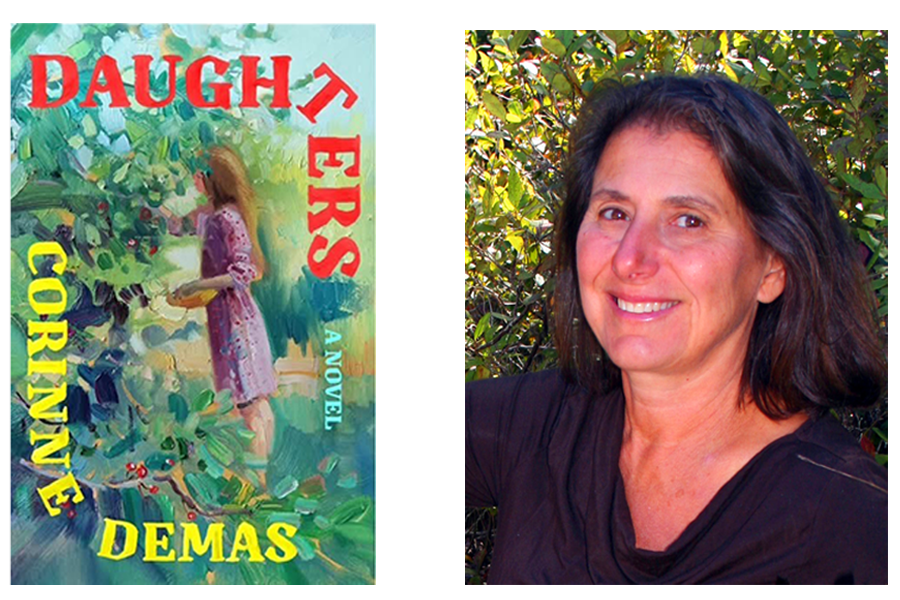
From award-winning author Corinne Demas comes a moving story about the sometimes volatile but ultimately unbreakable bonds between mothers and daughters.
Daughters
Page 69 Test Campaign for the American Reader by Marshal Zeringue
MASS LIVE and the Springfield Republican spotlight Daughters!
Corinne Demas’s novel Daughters is a compelling examination of a daughter’s long-held resentment and fear of disappointing a parent, and of a parent’s fear of losing her child’s love . . . One of Demas’s achievements is her balance of sympathy . . . Demas excels not only at portraying family disruption but at creating a bucolic atmosphere . . . Demas is working in subterranean territory, reflecting pain across generations in dialogue stitched with sorrow and misunderstandings. In this powerfully engaging novel, she gradually leads these generations toward new respect for one another and the reader toward sympathy for both sides of the volatile, electrically-charged mother-daughter bond.
-- The Massachusetts Review (read full review)
"Daughters works beautifully as a novel, thanks to the author’s skill at delineating character and weaving narrative. From the beginning to the end of the novel, Delia, Merry and their family emerge as real people about whom the reader cannot help caring...In short, Demas has created a moving, powerful story."
--Daily Hampshire Gazette (read full review)
Behind Daughters
My newest novel, Daughters, is set in a part of the world—Western Massachusetts—where I’ve lived for many years. I grew up in New York City, so I often note how different life is here, in a small New England town. The setting of Daughters —a two hundred year old house and barn on a small farm—is almost as important as the characters themselves: Delia is a Suzuki violin teacher on the cusp of retirement, her husband Bob, a retired radiologist, and Delia’s three adult children: her older daughter, Kat, her perennially good-natured son, Evan, and her youngest offspring, Meredith.
The novel begins when Meredith suddenly arrives on the doorstep with her young daughter, Eloise, in tow. Meredith has fled her marriage and her life in L.A. and is hoping to build a new one in her old home. Although the reader is made privilege to the reason, Meredith keeps this information a secret from her mother, which creates tension and dredges up a lot of issues from their past.
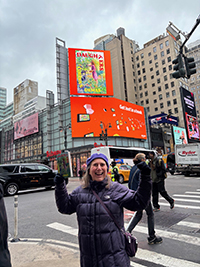
As someone who is both a daughter and a mother, and as someone who taught for many years at Mount Holyoke, a woman’s college, I’ve long been interested in the intensity of mother-daughter relationships, and the way family dynamics change when the daughter is no longer a child. In Daughters I wanted to explore how my characters’ old misunderstandings fuel new crises and how the basic, loving bond between mothers and daughters can bring the family together again.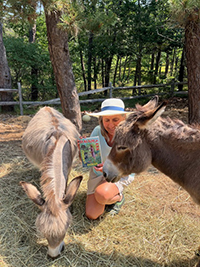
The question I’m most often asked by readers at books events is the extent of autobiography in my fiction. In Daughters, when Meredith has breakfast, she “poured too much syrup over” her undercooked waffle. My family insists it’s part of our family lore: “If you put enough maple syrup on anything, it was good.”
I do play the violin, like my characters in Daughters, though not especially well, but I still take lessons, and as a Suzuki parent,I’m quite familiar with the sound of “Twinkle” on “pint-sized” violins. (You can listen to all the music mentioned in Daughters on the playlist I pulled together.) I don’t live on a farm, but I have two miniature donkeys and a lively dog. Dogs have often made an appearance in my writing--in my kids’ books Saying Goodbye to Lulu, Always in Trouble, and Here Comes Trouble, as well as a Newfoundland named Melville in my novel The Road Towards Home. I think Juno and Ralph in Daughters are my favorites!
Published by
Little A
Hardcover: ISBN 978-1662536977
Paperback: ISBN 978-1662530845




You might also enjoy Corinne's novels
The Writing Circle and The Road Towards Home
and her memoir, Eleven Stories High:Growing Up
in Stuyvesant Town, 1948-1968
.


